Wondering about integrating Figma and Photoshop in your WordPress development workflow? Figma vs Photoshop is a tough choice for any web designer as they are both pretty amazing when you think about it.
Figma’s all about teamwork. It’s online, so you can work with others in real-time. It’s great for making website layouts and testing how they’ll work. Photoshop has been around forever and it’s still awesome for editing photos and making detailed graphics.
If you’re into website designs, you’ll probably use both. Figma’s your go-to for the overall look and feel, while Photoshop helps you make those eye-catching images pop.
But which one’s best for you? Let’s dive into the pros and cons of each!
TL;DR: Figma vs Photoshop
- Figma is better for web design workflows due to real-time collaboration, cloud-based access, and seamless team communication.
- Built-in prototyping in Figma allows designers to create interactive user flows without relying on external tools.
- Design systems and components in Figma ensure consistency and scalability across web projects. Vector-based design in Figma makes it ideal for responsive and multi-device layouts.
- Photoshop excels in raster-based tasks, such as photo editing and complex visual manipulation. However, Photoshop is less efficient for web UI design, often requiring additional tools for collaboration and prototyping.
Figma and Photoshop: A Brief Overview
Let’s dive into these two powerhouse design tools and enquire into their different purposes and unique strengths.
Figma is a cloud-based design tool that’s shaking up the design world. It’s built for collaboration and is particularly useful for creating user interfaces, website layouts, and app designs.
Key Highlights:
- Browser-based: Works on any computer without installation
- Real-time collaboration: Multiple designers can work on the same file simultaneously
- Prototyping: Easily create interactive mockups of your designs
- Design systems: Build and maintain consistent design libraries
Photoshop is Adobe’s flagship software and has been an industry standard for decades. It’s a robust tool primarily used for image editing, digital painting, and creating complex graphics.
Key Highlights:
- Advanced photo editing: Powerful tools for retouching and manipulating images
- Layer-based editing: Work on different elements separately for maximum control
- Extensive plugin ecosystem: Thousands of add-ons to extend functionality
- Precision tools: Create highly detailed graphics and illustrations
Know More: Guide to Converting PSD to WordPress as a Theme
Seamless PSD to Figma Conversion Services for Your Design Needs
Converting PSD files to Figma can be a time-consuming and error-prone process if done manually. Whether you are migrating a legacy project or optimizing your workflow for collaborative design, professional help ensures accuracy, efficiency, and consistency throughout the conversion. Our services are designed to make this transition smooth, saving your team valuable time while preserving design integrity.
- Accurate Layer Conversion: We ensure every layer, group, and element from your PSD is meticulously transferred to Figma. This guarantees that your original design structure remains intact, allowing for easy edits and updates.
- Optimized for Figma Workflow: Beyond simple conversion, we reorganize and optimize components for Figma’s vector-based environment. This enhances scalability, responsiveness, and ease of collaboration across teams.
- Preserving Visual Fidelity: All colors, fonts, and effects are carefully replicated in Figma. This ensures your design looks exactly like the original PSD, without any loss in quality or detail.
- Component and Asset Management: We convert reusable elements into Figma components and organize assets systematically. This not only speeds up your design process but also maintains consistency across your project.
- Quick Turnaround and Support: Our team provides fast, reliable delivery and ongoing support for any adjustments or refinements after the conversion, ensuring your project stays on schedule.
With our professional PSD to Figma conversion service, your designs are ready for modern workflows, collaboration, and scalability.
Get Started with Your PSD to Figma Conversion Today
Transform your designs seamlessly and save time with our expert conversion services. Let our team handle the technical work so you can focus on creativity and collaboration.
Figma vs Photoshop: Key Features Comparison
Choosing between Figma and Photoshop is no longer a simple matter of preference; rather, it depends on workflow requirements, team structure, and the type of design output you prioritize.
While both tools are industry leaders, they are built with fundamentally different design philosophies. Below is a structured, feature-by-feature comparison to help you understand where each tool excels and where it may fall short.
Collaboration: Figma’s Team-Friendly Approach vs Photoshop’s Solo Strength
Collaboration has become a core requirement in modern design workflows. Figma was built with real-time collaboration at its core, enabling multiple stakeholders to work on the same file simultaneously. Designers, developers, and clients can comment, edit, and review designs without switching tools.

Photoshop, on the other hand, remains largely a single-user application. Although Adobe has introduced cloud documents and shared libraries, real-time co-editing is still limited. Consequently, collaboration often relies on exported files, version naming, and external communication tools.
Verdict: Figma is the clear winner for team-based and remote collaboration, while Photoshop remains better suited for individual designers working independently.
Prototyping: Figma’s Interactive Designs vs Photoshop’s Static Visuals
Prototyping is essential for validating user experience before development. Figma offers built-in prototyping tools that allow designers to create interactive flows, transitions, and clickable elements within the same environment. As a result, stakeholders can experience near-realistic user journeys early in the design process.

In contrast, Photoshop primarily focuses on static visual design. While designers can create high-fidelity mockups, interactive prototyping typically requires third-party tools such as Adobe XD or external integrations, adding complexity to the workflow.
Verdict: For UX/UI designers who need interactive prototypes, Figma is significantly more efficient and streamlined than Photoshop.
File Management: Figma’s Cloud-Based System vs Photoshop’s Local Storage
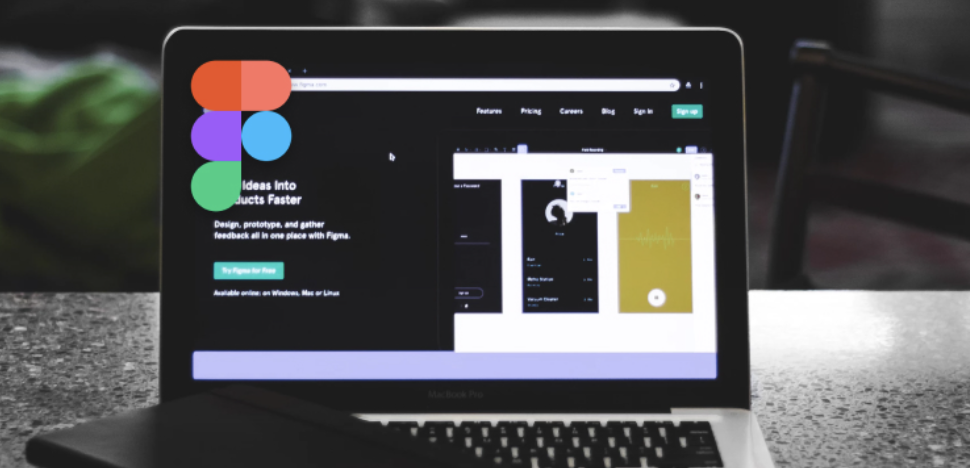
File management directly impacts accessibility and version control. Figma operates entirely in the cloud, which means files are automatically saved, versioned, and accessible from any device with an internet connection. This reduces the risk of data loss and eliminates the need for manual backups.
Photoshop traditionally relies on local storage, although Adobe Creative Cloud has introduced syncing options. However, managing versions and ensuring team members access the correct file often requires additional discipline and structure.
Verdict: Figma’s cloud-first approach offers superior accessibility and version control, whereas Photoshop provides more control for designers who prefer local file management.
Learning Curve: Figma’s User-Friendly Interface vs Photoshop’s Complex Toolkit
Ease of use plays a major role, especially for beginners or cross-functional teams. Figma’s interface is intuitive, with a relatively gentle learning curve. Non-designers, such as product managers or marketers, can quickly understand and interact with design files.
Photoshop, by comparison, is a powerful but complex tool. Its extensive feature set can be overwhelming, and mastering it often requires significant time and training. However, this complexity also enables advanced design capabilities.
Verdict: Figma is more accessible for beginners and collaborative teams, while Photoshop rewards experienced designers who need deep creative control.
Design Systems: Figma’s Built-in Libraries vs Photoshop’s Asset Export
Design systems ensure consistency across products and platforms. Figma excels in this area with shared libraries, components, and styles that update globally. Teams can maintain brand consistency effortlessly while scaling design operations.
Photoshop supports asset creation and export, but lacks a native, dynamic design system for managing assets. Maintaining consistency often involves manual updates or reliance on Adobe Libraries, which are less integrated into everyday workflows.
Verdict: Figma is better suited for scalable design systems, whereas Photoshop is more asset-centric and less system-driven.
Vector vs Raster: Figma’s Scalability vs Photoshop’s Pixel Precision
The distinction between vector and raster design is critical. Figma is primarily a vector-based tool, making it ideal for interface design, icons, and responsive layouts that need to scale across devices without quality loss.
Photoshop, conversely, is a raster-based powerhouse. It excels at photo manipulation, detailed illustrations, and pixel-perfect visual effects that require precise control over individual pixels.
Verdict: Figma is superior for scalable UI and digital product design, while Photoshop remains unmatched for photo editing and high-detail raster work.
Performance: Figma’s Light Footprint vs Photoshop’s Resource Hunger
Performance affects productivity, especially on lower-end systems. Figma runs in the browser or as a lightweight desktop app, consuming relatively fewer system resources. This makes it accessible across a wide range of devices.
Photoshop is resource-intensive, often requiring powerful hardware for optimal performance. Large files, multiple layers, and advanced effects can slow down workflows on less capable machines.
Verdict: Figma offers smoother performance for everyday design tasks, whereas Photoshop demands stronger hardware but delivers advanced capabilities in return.
Final Thoughts: Which Design Tool Has More Pros for Web Designing?
When it comes to web designing, Figma clearly offers more practical advantages for modern workflows. Its real-time collaboration, cloud-based file management, and built-in prototyping make it ideal for designing responsive websites and user-centric interfaces. Moreover, Figma’s vector-based approach ensures scalability across devices, while design systems help maintain visual consistency.
Photoshop, although extremely powerful for image editing and detailed visual work, is less efficient for end-to-end web design processes. It often requires additional tools for prototyping and collaboration. Therefore, for teams and designers focused on UI/UX, speed, and collaboration, Figma is the more future-ready and web-friendly choice.
FAQs About Figma vs Photoshop
Which is best, Figma or Photoshop?
Figma is best for web and UI/UX design, while Photoshop excels in photo editing and detailed visual work.
Can Figma replace Photoshop?
Figma can replace Photoshop for web and interface design, but cannot fully replace Photoshop’s advanced image editing capabilities.
Is Figma good for image editing?
Figma has basic image editing features, but it is not suitable for complex photo manipulation or detailed raster work.
Is Photoshop good for web design?
Photoshop can create web layouts but lacks real-time collaboration and interactive prototyping features.
Which tool is better for team projects?
Figma is superior for team collaboration due to its cloud-based, real-time editing environment.